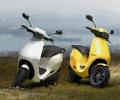
The launch of a range of electric motorbikes (e-bikes) by Bengaluru-based Ola Electric, a first for the company, has disconcerted the industry because the low price the firm claims to be offering has the potential to disrupt the market. On August 15, Ola unveiled its Roadster series e-bike with a starting-price at Rs 74,999. This new pricing undercuts the previous lowest price in the category, which was Rs 110,000.

Electric two-wheeler company Ola Electric Mobility will float its initial public offering (IPO) on August 2, and a significant part of the proceeds will be used for capacity expansion of its cell manufacturing plant and revving up R&D. The initial share sale will conclude on August 6, and the bidding for anchor investors will open for a day on August 1, according to the red herring prospectus (RHP).

In March 2021, Ola Electric founder Bhavish Aggarwal was seen surveying an empty 500-acre land surrounded by shoe factories, temples, bakery shops, coconut trees and dusty roads in Pochampalli town of Krishnagiri district, Tamil Nadu. Many excavators and workers were busy at the construction site to build the Ola Futurefactory for electric vehicles.
Ola Electric, the SoftBank-backed electric vehicle (EV) maker, is likely to pursue a valuation of approximately $4.5 billion in its upcoming initial public offering (IPO), marking about 18 per cent decrease from its last funding round valuation of around $5.5 billion, according to industry sources. The Bhavish Aggarwal-founded firm aims to file for the IPO by next month, according to people familiar with the matter. "The strategy is to price the IPO attractively for investors, fostering long-term growth and wealth creation," said a source.
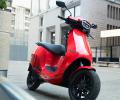
It takes a while to get used to the constant and instant supply of power that is the case with EVs, and handling the S1 Pro when it takes a corner or makes a turn can be tricky, says Pavan Lall.

Ola Electric's initial public offering (IPO), of Rs 5,500 crore, is essentially aimed at ensuring the company maintain its top position in the electric two-wheeler segment, with incumbent players TVS and Bajaj Auto giving a fight to the number one player in market share. Most experts and competitors say the amount being raised is in line with the investment required to expand the electric-vehicle (EV) business. There are two discernible trends in the competitive electric two-wheeler market.

Ola Electric, India's largest maker of electric scooters, launched its most affordable ride on Tuesday, in an attempt to woo more customers and expand its electric two-wheeler lineup.
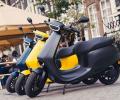
Ola Founder Bhavish Aggarwal on Wednesday said electric scooter based on Gen 3 platform will be unveiled later this week. "Bringing the 'Next Level' with @OlaElectric Gen 3 scooters! We've significantly surpassed Gen 2 products in every way -- much higher performance, more features, great design! And a surprise to change the industry all over again," he stated on X.
From powering mobile devices, US chip designer Qualcomm has tied up with Ola Electric to power its electric scooters. Qualcomm is providing the key 4G connected octa core android platform which provides connectivity, computing capabilities and enables rich immersive displays with power saving software.

India's electric two-wheeler (e2W) market is consolidating, with established manufacturers TVS Motor, Bajaj Auto, and Hero MotoCorp, alongside EV specialist Ather Energy, driving nearly 96% of incremental registrations in the first half of 2026, while former market leader Ola Electric experienced a significant decline in registrations.
Ola Electric on Thursday said it has forayed into the country's Rs 1 lakh crore battery energy storage systems market, which is projected to grow to over Rs 3 lakh crore by 2030.

Ola Electric's technology team is working hard to iron out the technical kinks that marred the electric vehicle company's hyped online sale of its electric scooters (e-scooters) - the S1 and the S1 Pro - on Wednesday, said company sources. The SoftBank-backed firm is facing technical difficulties in making the website live for the purchase of its e-scooters. According to company sources, the website couldn't go live as there were integration issues.

India's electric vehicle market achieved a significant milestone in June 2026, accounting for over 12% of total vehicle retail sales for the first time. This growth, driven by strong demand across electric two-wheelers, passenger vehicles, and commercial vehicles, saw overall EV retail sales surge by 63% year-on-year to a record 306,220 units, indicating a mainstream shift in mobility.
Ola Electric has finalised its second phase of expansion, under which it will increase its plant capacity fourfold - from 1 million two-wheelers per annum to 4 million. This will also include motorcycles, said a top executive of the company. It will also build a plant with a 5 Gwh of advanced chemistry cell battery storage capacity in the same super factory located on the outskirts of Bengaluru.

There is also lack of mandate from the government on adoption of electric mobility after ambitious talks of moving all new automobile sales to electric by 2030

India's electric vehicle (EV) markets expanded gains in January compared to the year-ago period, as two-wheeler and passenger vehicle sales triggered a shuffle in the competitive landscape, data from an automobile dealers' association showed.

VinFast has gone from an unknown brand to India's fifth-largest EV carmaker in just seven months, but its toughest battle is only beginning.

Ola Electric on Thursday teased five new electric motorcycles that the SoftBank-backed company is working on, announcing the range after selling electric scooters. The products are labelled cafe racer, an adventure tourer, a scrambler and a naked motorcycle. The motorcycles are expected to be launched next year and would include premium and mass-market versions, said sources.
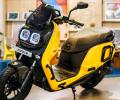
India's home-grown EV startups say the government's auto PLI scheme is helping big players while shutting out innovators building electric two- and three-wheelers from scratch.

The Maharashtra government has revoked provisional licences issued to motorbike aggregators like Rapido, Ola, and Uber due to non-compliance with the Maharashtra E-bike Taxi Rules 2024, including the mandatory use of electric vehicles and submission of required documents.

Ola Electric on Monday said it will foray into the electric car segment with plans to launch its first model by 2024. The company, which struggled with deliveries for its electric scooters after it announced entry into the segment exactly a year ago, has set an ambitious target of selling 10 lakh electric cars by 2026-2027. In a press conference, Ola founder and CEO Bhavish Aggarwal said Ola Electric aims to provide a range of electric two-wheelers to electric cars which are priced in the range of Rs 1 lakh to Rs 50 lakh.
Bajaj Auto has become the top player in India's electric vehicle market by monthly volumes, across all categories, with over 25,000 sales and registrations in September. This comes on the back of a big push in expanding distribution by the company and steady demand of electric three-wheelers. In September, the company - according to the latest Vahan data - recorded sales of 17,570 electric two-wheelers, 4,575 three-wheelers, and 3,000 Yulu low-speed electric bikes (based on company sales numbers), which do not require a licence and are not registered on Vahan.

As a 75-year-old septuagenarian, Bajaj Auto has adapted itself as a nod to competition, regulations, and changing buyer preference. It will continue to do so, said its managing director Rajiv Bajaj at the launch of the all-new Pulsar 250. This was in response to a question on the company's preparedness for disruption by electric two-wheeler start-ups.

The incident, which occurred early Monday morning, was reportedly caused by a sparking ventilator.

New-age stocks to buy: Most new-age stocks have turned out to be wealth destroyers in stock markets, so far, in calendar year 2025. Shares of Ola Electric Mobility, for instance, have plunged nearly 50 per cent in the first half of CY 2025, while those of Swiggy, PB Fintech, Paytm, and Eternal (Zomato) have crashed between 6 per cent and 25 per cent, ACE Equity data shows.
The growing complexity of E2Ws and the evolving threat landscape make it challenging to guarantee complete immunity from attacks.
Electric two-wheeler (e2W) companies are upset with some of their suppliers of heavy rare-earth magnet-powered electric motors, who have objected to their proposal - under consideration by the government - that would allow e2W original equipment manufacturers (OEMs) an exemption from localisation norms on electric motors, thereby enabling them to continue receiving the 5,000-per-vehicle subsidy.V

Bhavish Aggarwal, founder and chief executive officer of Ola, is encouraging developers to switch from Google Maps to Ola Maps. Ola is offering developers a year of free access to Ola Maps on the company's Krutrim Cloud and over Rs 100 crore in free credits. This initiative comes after Ola replaced Google Maps with its own Ola Maps, leading to annual savings of around Rs 100 crore.
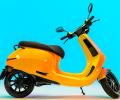
Ride-hailing major Ola on Wednesday said it will launch its electric two-wheeler range in New Zealand. This will help support the New Zealand government's goal of bringing on road 64,000 new electric vehicles by the end of 2021, while also helping the public sector become carbon neutral by 2025, Ola said in a statement. According to the industry sources, the company plans to launch the range in New Zealand over the next 6-9 months.

Electric passenger vehicle (PV) retail sales jumped more than twofold in September with Tata Motors (TaMo) leading the pack having over 6,000 registrations and a 40 per cent market share.
Automobile manufacturers are increasingly vocal about the mounting paperwork and delays associated with India's Production-Linked Incentive (PLI) scheme for the automotive sector, arguing that compliance requirements are becoming as challenging as meeting technical eligibility conditions. They are pushing for a simpler, faster, and more predictable certification and compliance framework.
SoftBank Group-backed Ola Electric is in talks with multiple global suppliers to build a battery cell manufacturing plant in India with a capacity of up to 50-gigawatt hours, sources said. As part of its broader electrification push, the firm plans to invest in companies with advanced cell and battery technology, alongside the 50 Gwh battery plant. Ola Electric needs 40 Gwh of battery capacity to power 10 million electric scooters annually. The remainder will be for its electric cars, which the company plans to manufacture in the future.

Japanese investment giant SoftBank is looking to partially exit from three startups which are aiming at an IPO next year - Ola Electric, Swiggy and First Cry. But its decision will depend on the size of the offer for sale pool in each of the companies. According to sources aware of the strategy, Softbank invested over $850 million collectively in these companies whose value conservatively would go up more than 4.3 times to around $3.7 billion, based on preliminary estimates of their projected valuation when they go public next year.

Ola's factory will create 10,000 jobs and serve as the company's global manufacturing hub for India and international markets.
Ola founder and chief executive officer (CEO) Bhavish Aggarwal will step back from day-to-day operations to focus more on engineering functions, team building, and products, apart from focusing on long-term strategic projects, such as two-wheelers, cars, and innovations in quick commerce and international expansion. "I'll be spending more time with all engineering functions, team building, and on products," said Aggarwal in an internal note, adding, "I'll also be increasing my focus on our longer-term strategic projects, including new two-wheeler products, our car project, innovations in quick commerce, electrifying ride-hailing, our cell research and development (R&D), international expansion, building our Pune technology (tech) centre, and Futurefoundry UK." To drive scale, speed, and quality, Aggarwal said he is expanding Ola Group's chief financial officer (CFO) G R Arun Kumar's role to help him steer 'day-to-day operations' across the group.

Layoffs, corporate restructuring, governance and most importantly profitability: The 14 Indian startups that plan IPOs this year are pulling out all the stops to ensure successful market debuts.

Players like Ola Electric, Ather Energy, Kinetic Green and BGauss are introducing premium services and infrastructure enhancements.

As a tech services company, Ola has never been in hardcore manufacturing. And unlike in ride hailing, which is a two-player market (Uber is the only other competitor), in two-wheelers it faces many entrenched players. But most of all, rivals say Ola's targets are out of sync with most, even ambitious, projections.

Start-ups don't care that mad-money funding comes to a hard stop after an IPO, observes Debashis Basu. As a listed entity, corporate actions have to take the interests of all shareholders, especially minority shareholders, into account. So far, we are not seeing any sign of it, observes Debashis Basu.
India's electric two-wheeler (e2W) manufacturers have urged the government to extend subsidies under the PM E-Drive (Electric Drive Revolution in Innovative Vehicle Enhancement) scheme beyond March 2026, cautioning that a withdrawal could slow near-term demand even as confidence in long-term electric mobility adoption remains intact.
